
My Journey
I started teaching at nineteen.
Not because it was easy.
Not because it was safe.
But because I believed, even then, that classrooms could be places where young people found their voices before the world tried to take them. I knew that because even throughout my university journey, I had to work really hard to chip away at the double consciousness that was born of growing up in a culturally rich, multigenerational, Palestinian family with a legacy that storied its way into every atom of my being with all of those identities invisible throughout my school career.
Before I was the teacher, I was the student who rarely saw herself reflected back.
I was the first in a very large family to graduate with a university degree at nineteen. I was the first in my family to step onto a college campus, to navigate lecture halls and office hours, to decode financial aid forms and academic language that was never designed with me in mind. Years later, I became the first in my family to earn a doctorate. I accomplished these firsts as a young mother. AWhen I had my eldest daughter at sixteen, I knew that I needed to carve a pathway for her and others like her. There was no doubt in my mind that education was the most powerful profession in the world and I wanted to build my power to craft different spaces, better spaces for all children.
Every milestone carried more than my name. It carried my parents’ sacrifices, my community’s prayers, and the quiet understanding that I was widening a path no one had walked before. I always say, my journey was carved on my late father’s beautiful calloused hands. He carved my pathway. I had big shoes to fill.
And all along my path to achieve those goals- through my doctorate, I rarely saw myself represented in school spaces.
I did not see Arab girls like me in textbooks.
I did not see my culture centered in curriculum.
I did not see Islam represented accurately.
I did not see professors who shared my identity.
I learned early what it meant to be hypervisible and invisible at the same time (Jaber, .
That absence shaped me. It sharpened my awareness. It clarified my purpose. It made me determined that my students would never have to search as hard as I did to find themselves in the room, in the world!
In my early years of teaching, I was often the youngest in the faculty meeting. I carried binders home from conferences. I remember sitting at my first NCTE and my first ASCD conferences listening to speakers like Robert Marzano describe teaching as both art and science. I remember thinking: I am an artist. That framing changed everything for me. Teaching was not compliance. It was craft. It was human work.
As my career unfolded, I began naming what I had lived.
I studied how systems render some students hypervisible and others invisible—particularly Arab and Muslim youth navigating identity in a post-9/11 America. I examined how data can be weaponized, how curriculum can silence as easily as it can liberate, and how policies often misidentify “problems” by locating them in children instead of systems.
Those tensions became the heartbeat of my scholarship.
My classroom became an incubator for human-centered pedagogy. I refuse to teach content without context. I layer literacy with agency, self advocacy, identity healing work, and global connection and purpose to make learning experiences meaningful. I always tell my students, if it is not making us better in the real world, we aren’t going to learn it. I ask students to read the world as carefully as they read the text. I build spaces where voice is not enrichment, it is a right. I help students make strong connections between themselves and the world, to envision themselves as changemakers and stewards of their own lives with immense power.
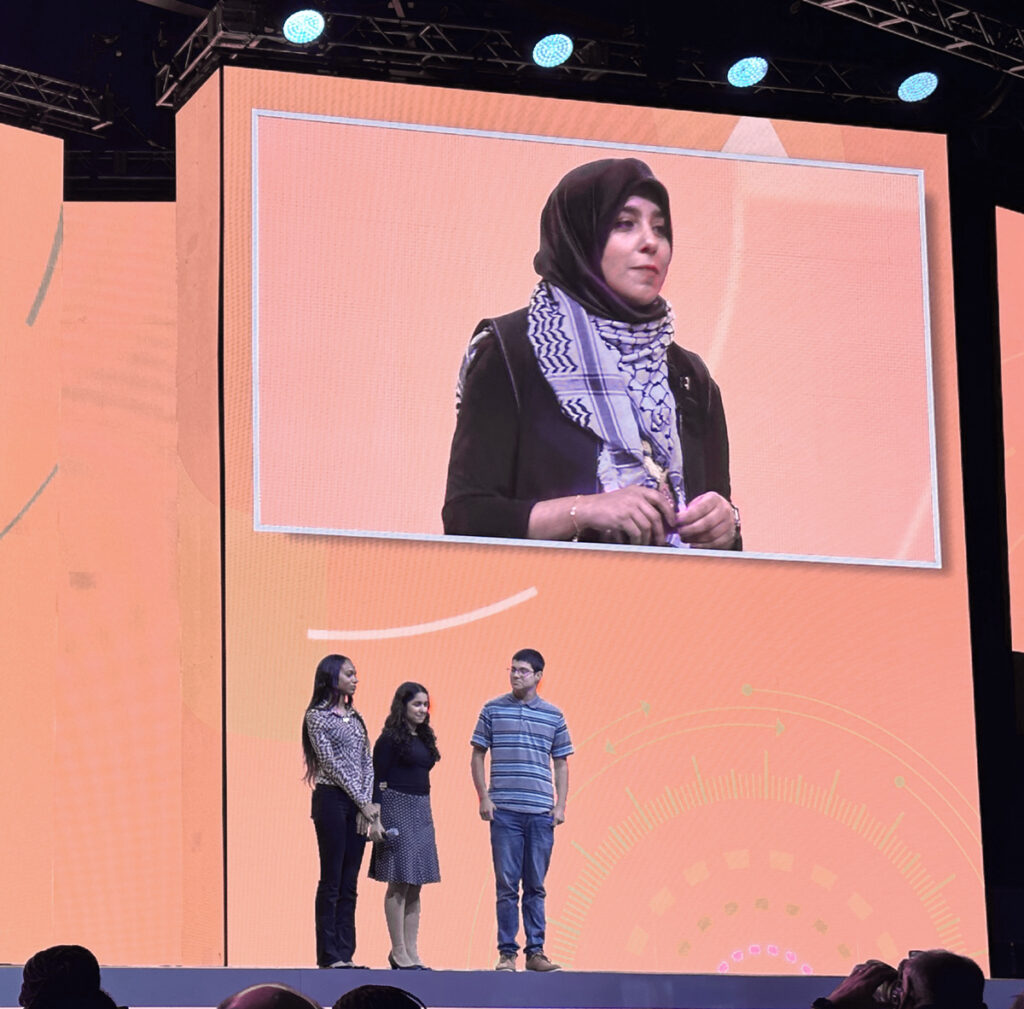
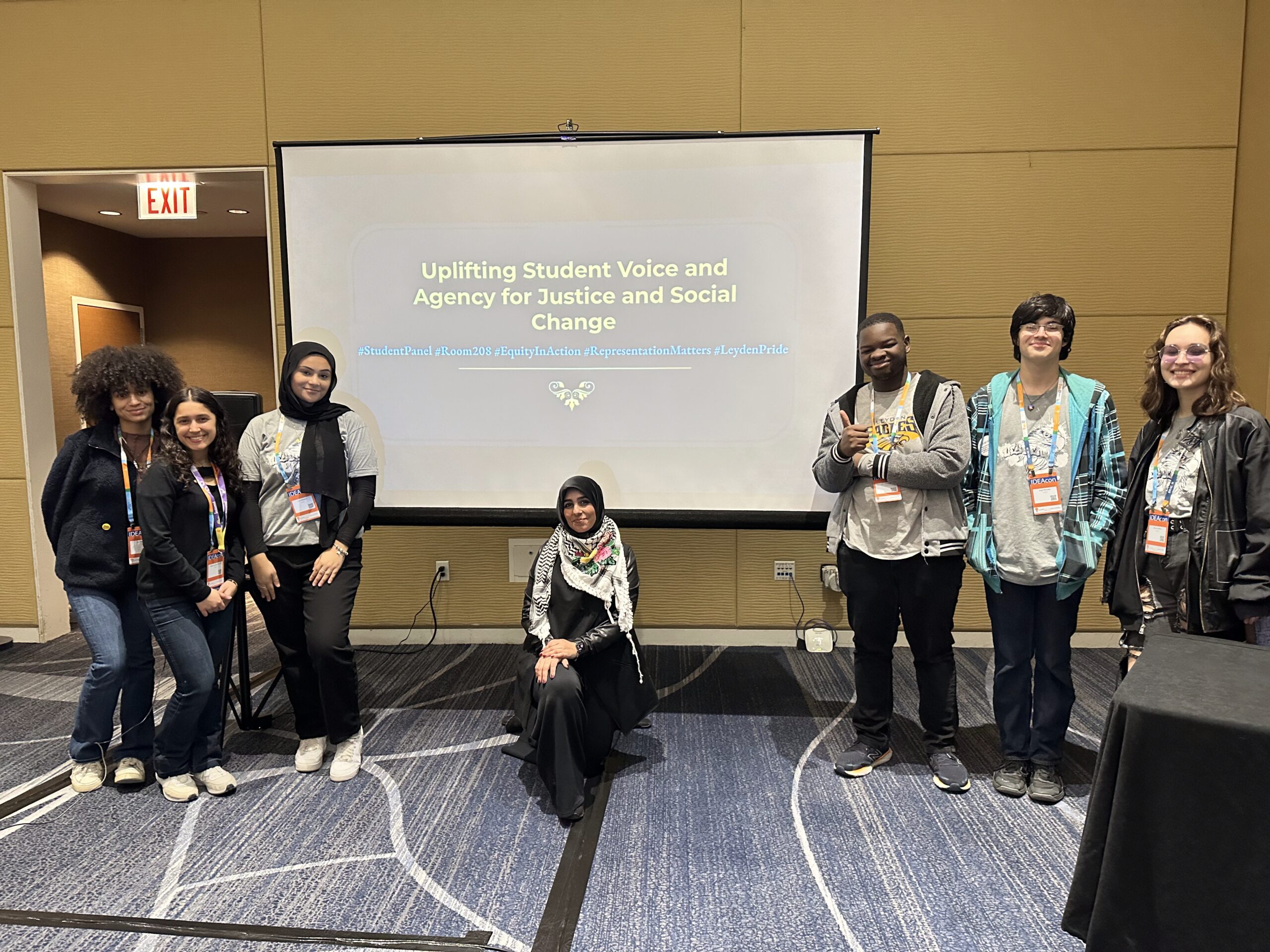
I found my presenter’s voice when I completed my dissertation in 2019. I learned that there was so much hidden through the experiences of students I talked to that needed to be shared with the world, with their voices at the forefront. In 2019, I delivered my first keynote alongside my students about the power of Human-Centered Pedagogy. Sharing the stage and amplifying youth voices was not just professional growth. It was reclamation. Since then we have spoken at over a hundred conferences to audiences as large as 20,000 educators. My students have been my best and favorite teachers.
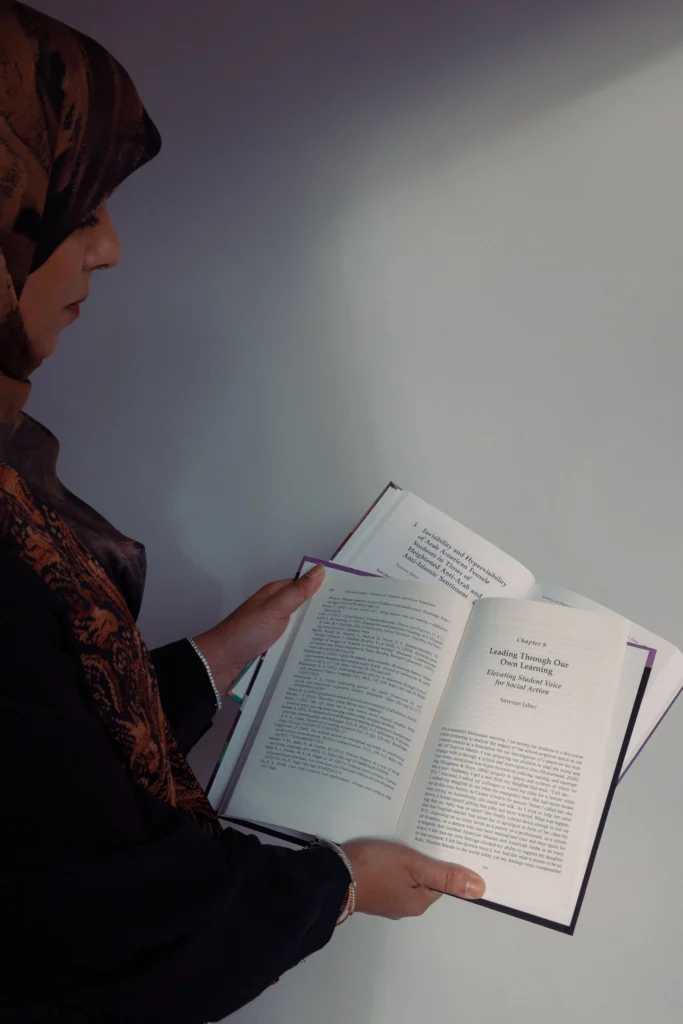
Today, I serve as a university professor preparing preservice teachers to meet this political and technological moment with courage, and a consultant through Dr. Sawsan Jaber Consulting. I partner with districts to move from compliance-based data to human-centered inquiry. I keynote on equity-centered instruction. I co-authored Pedagogies of Voice (2025) because I believe what I have always practiced: voice is identity, and when we cultivate it, we preserve humanity.
I design graduate courses grounded in these principles. I build capstones that move educators from gatekeeping to access. I mentor teachers to interrogate systems rather than students. I begin with joy and move toward justice.
But my proudest moments are still quiet ones.
When a student says, “I’ve never read a book that felt like me.”
When a preservice teacher shifts from deficit language to possibility.
When a young person realizes their story belongs in the world.
When a new teacher realizes that she has the power to heal in her classroom.
I am shaped by scholarship and story, by research and resistance, by policy and poetry. I bridge worlds of K–12 and higher education, local classrooms and global citizenship, lived experience and institutional change.
And through it all, I carry my lineage with me.
A story of Palestinian refugees determined to heal the world
The family gatherings full of voices and laughter.
The stories rooted in my responsibility to fight for justice and liberation, a charge.
A father who made every person feel chosen.
The resilience of migration, faith, and survival.
The communities that taught me how to hold grief and celebration in the same breath.
My journey is not accidental.
It is inherited.
It is cultivated.
It is intentional.
I have been storied here by my ancestors and I owe it to them to fulfill their dreams while sitting in my own as a future ancestor.
I teach because I never saw myself represented, and I refuse to let that be someone else’s story.
I research because I know what invisibility costs.
I lead because access should not be rare.
I write because voice is sacred.
And when people ask how I do this work with conviction, with warmth, with a refusal to shrink, I tell them:
I come from giants.